How NPS Varthur’s Co-Scholastic Programme Builds Confidence and Character
A child’s education is about more than marks and examinations. As children grow, they also need to learn how to communicate their ideas, work with others, handle challenges, discover their interests and become increasingly independent.
This is where personality development becomes an important part of school life.
For school-age children, personality development is not about turning every child into an extrovert or teaching a child how to behave like an adult. It is about creating opportunities for children to develop confidence, communication skills, emotional awareness, responsibility and positive social behaviour.
At National Public School, Varthur, these opportunities are supported through the school’s Scholastic Programme, extracurricular activities, sports, arts, cultural activities and other learning experiences. The school describes its approach as one that balances academic achievement with creative and social development.
What Does Personality Development Mean for School-Age Children?
Personality development during childhood is closely connected with how children understand themselves and interact with the people around them.
A child who gradually becomes comfortable speaking in front of others is developing confidence. A child who learns to listen to a teammate and contribute to a group is developing collaboration skills. A child who handles a mistake, tries again and learns from the experience is developing resilience.
It can include:
- Confidence — being willing to participate, try and express an opinion.
- Communication skills — listening, speaking and expressing ideas clearly.
- Social skills — cooperating, sharing responsibilities and respecting others.
- Emotional intelligence — recognising emotions and responding appropriately.
- Creativity — expressing ideas through art, music, performance and other activities.
- Responsibility — developing independence, discipline and positive habits.
The objective is not to make every child behave in exactly the same way. It is to help children discover their strengths while developing the skills needed to participate confidently in school and society.
Why Personality Development Matters Alongside Academics
Academic knowledge gives children an important foundation. But children also need opportunities to use that knowledge and interact with others.
A classroom presentation, for example, can encourage a student to organise thoughts and communicate them clearly. A team sport can teach cooperation and sportsmanship. Performing in an Annual Day programme can give a child experience in preparation, participation and being in front of an audience.
These experiences can complement academic learning by developing skills that are difficult to build through textbooks alone.
This is also consistent with NPS Varthur’s stated mission of providing students with opportunities to develop 21st-century skills and become versatile, value-driven individuals.
How NPS Varthur’s Co-Scholastic Programme Builds Confidence and Character
The most meaningful personality-development opportunities are those in which children actually participate. At NPS Varthur, the school’s published Scholastic Programme provides several such opportunities across different stages of school life.
- Arts and creative activities encourage self-expression
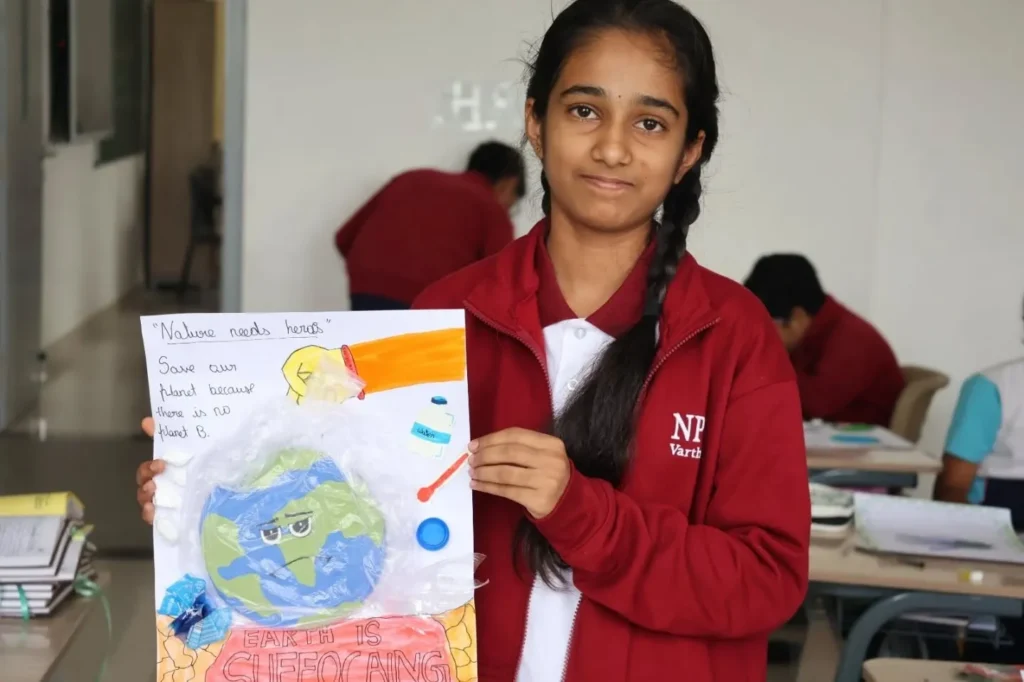
Art and creative expression give children a way to communicate ideas without relying only on conventional academic answers.
NPS Varthur’s Primary School Programme includes weekly skill classes covering art, computer education, library sessions, music and physical education. These experiences allow students to explore interests beyond their core academic subjects.
Creative activities can also encourage children to experiment, make choices and develop their own ideas—important aspects of confidence and self-expression.
- Music, celebrations and Annual Day provide opportunities to participate
School events create natural opportunities for children to participate in front of their peers, teachers and families.
NPS Varthur’s Primary School Programme specifically highlights celebrations, festivals, Annual Day and Sports Day as opportunities for students to explore their talents and build confidence.
For some children, taking part may mean performing on stage. For others, it could mean helping with an activity, presentation or group responsibility.
The important part is participation.
- Sports develop teamwork and sportsmanship
Sports can contribute to personality development in a very practical way.
Children learn to follow rules, work with teammates, handle both success and disappointment and keep trying when something does not go according to plan.
NPS Varthur’s programme includes physical education and sports opportunities, while the school’s middle-school programme highlights cultural and sports activities as ways to build friendships, teamwork and sportsmanship.
The school also lists facilities for badminton, basketball, cricket, football and gymnastics.
- Library, computer learning and field trips broaden communication and curiosity
Personality development also happens when children encounter new ideas and experiences.
Library sessions can encourage reading and independent exploration. Computer education introduces children to technology as a learning tool. Field trips take learning beyond the classroom and expose students to new environments.
NPS Varthur’s Primary School Programme includes library and computer education sessions as well as planned field trips.
These experiences can help children develop curiosity, independence and the confidence to engage with unfamiliar situations.
- Different age groups need different opportunities
Personality development does not look identical at every stage.
For younger children, the emphasis may be on self-expression, listening, speaking, social interaction and basic independence.
NPS Varthur’s Early Years Programme identifies skills including self-reliance, social behaviour, listening and speaking, creative expression, music, playing and games.
As children progress into primary and middle school, opportunities can increasingly involve teamwork, sportsmanship, cultural participation, communication and taking greater responsibility.
This gradual development matters because confidence is built through repeated opportunities to participate—not through a single activity or event.
Personality Development as Part of Holistic Education
A well-rounded education gives children opportunities to learn in different ways.
Academic lessons develop subject knowledge. Sports can develop teamwork and discipline. Music and art encourage expression and creativity. School events provide opportunities to communicate and participate. Field trips provide experiences beyond the classroom.
Together, these experiences contribute to holistic development.
NPS Varthur’s stated vision is to develop socially responsible, independent and knowledgeable learners and leaders equipped with multi-dimensional skills, values and integrity.
For parents, this means personality development is best understood not as a separate subject, but as something that can be developed throughout a child’s school experience.
Frequently Asked Questions
How does school help develop a child’s personality?
Schools can provide regular opportunities for children to communicate, collaborate, participate in activities, explore interests, take responsibility and interact with different people. These experiences can support confidence, communication and social development alongside academics.
What is the role of extracurricular activities in personality development?
Extracurricular activities give children opportunities to discover interests and practise skills outside conventional academic lessons. Sports, music, art, cultural programmes and other activities can encourage teamwork, creativity, communication and confidence.
Does personality development mean making a child more outgoing?
No. Personality development is not about changing a child’s natural personality. A quiet child can be confident, and an outgoing child can still need to develop listening, emotional-awareness or teamwork skills. The aim is to help each child develop appropriate social, communication and life skills.
How does NPS Varthur support holistic development?
NPS Varthur combines its academic programme with extracurricular and co-scholastic opportunities including art, music, computer education, library sessions, physical education, field trips, celebrations, Annual Day, Sports Day and cultural and sports activities.
Helping Children Grow Beyond the Classroom
Personality development happens gradually. A child may first find the confidence to answer a question in class, later participate in a group activity, then perform on stage, play as part of a team or take responsibility for a school activity.
Each experience adds something.
At NPS Varthur, the combination of academic learning with arts, sports, music, technology, library activities, field trips and school events provides children with opportunities to develop confidence, communication, creativity, social skills and responsibility alongside their academic knowledge.
For parents, that is an important part of looking at a child’s education as a whole: not only what they learn, but also who they are becoming while they learn.